Engineering Skills Travel Surprisingly Well
We recruit across automotive, motorsport, aerospace, defence, marine and other specialist technical sectors, and one of the interesting things about working across those markets is seeing just how much crossover there can be. An engineer from aerospace may have exactly the quality and compliance background required by an automotive manufacturer, while somebody from motorsport may bring experience of incredibly fast development cycles and solving complex problems under considerable time pressure.
Likewise, a marine engineer may have dealt with systems, materials or environmental challenges that are directly relevant to a completely different sector. The industry printed on the CV is only part of the story, and concentrating too heavily on it can mean overlooking somebody whose actual engineering experience is remarkably close to what you need.
Look at What They Have Actually Done
This is where job titles can be particularly misleading. Two people called “Design Engineer” can have completely different experience, while two engineers from completely different industries may have spent the last five years solving remarkably similar problems. What software have they used? What materials have they worked with? What tolerances, manufacturing processes and standards are they familiar with? What sort of production environment have they worked in and what level of responsibility have they actually held?
Those questions can tell you considerably more about somebody’s suitability than the logo at the top of their current payslip. It is also one of the areas where a recruiter who understands the requirement can add considerably more value than simply searching a CV database for the same handful of keywords.
Industry Experience Can Still Matter
This isn’t an argument for ignoring sector experience altogether. If somebody needs detailed knowledge of a specific regulatory environment, customer approval process or industry standard, there may be very good reasons for wanting somebody who has done it before. The important thing is identifying which parts of the requirement are genuinely essential and which are simply desirable.
If there are ten things on the specification and only two genuinely require previous sector experience, does the candidate really need all ten on day one? Could a very good engineer with eight of them learn the remaining two? More importantly, could somebody with strong transferable engineering experience ultimately prove to be a better appointment than a weaker candidate who happens to have worked for the right type of company?
Transferable Experience Can Widen a Very Small Market
This becomes particularly important when recruiting for scarce skills. If there are only a handful of suitable engineers within a realistic commuting distance and you immediately exclude everybody outside your sector, you can create an almost impossible search. Opening the brief doesn’t mean lowering the standard; it means looking at the underlying engineering skills rather than using previous industry experience as a shortcut.
Some of the most interesting candidate conversations we have with clients start with the words: “They haven’t worked in your sector before, but have a look at what they’ve actually been doing.” Sometimes the answer will still be no, because the sector experience genuinely is essential. But sometimes that conversation introduces an employer to somebody they would never otherwise have considered.
Final Thought
Previous industry experience can undoubtedly be valuable, but it shouldn’t automatically become a substitute for understanding someone’s actual engineering ability. The best person for your automotive, aerospace, defence or marine vacancy may currently be working somewhere you hadn’t considered.
Sometimes widening the search doesn’t mean compromising on the person you want. It simply means finding someone you would otherwise never have met.
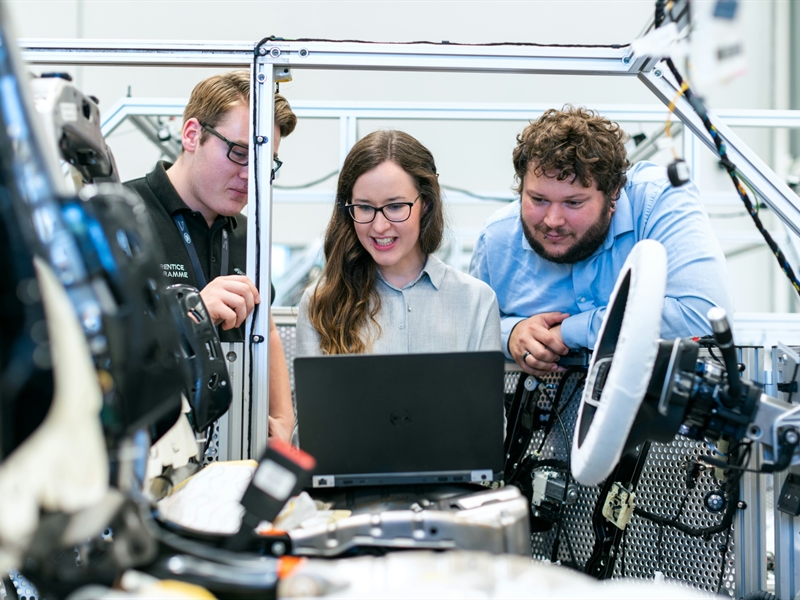
Photo by ThisisEngineering on Unsplash